Adverse Event Protocols
for your Admin Team
Equip your non-nursing, non-medical team members with the language, the dialogue skills and the efficiency that keep your practice safe, your clients safe and your clinic compliant, without breaching their scope of practice or saying anything they shouldn't.
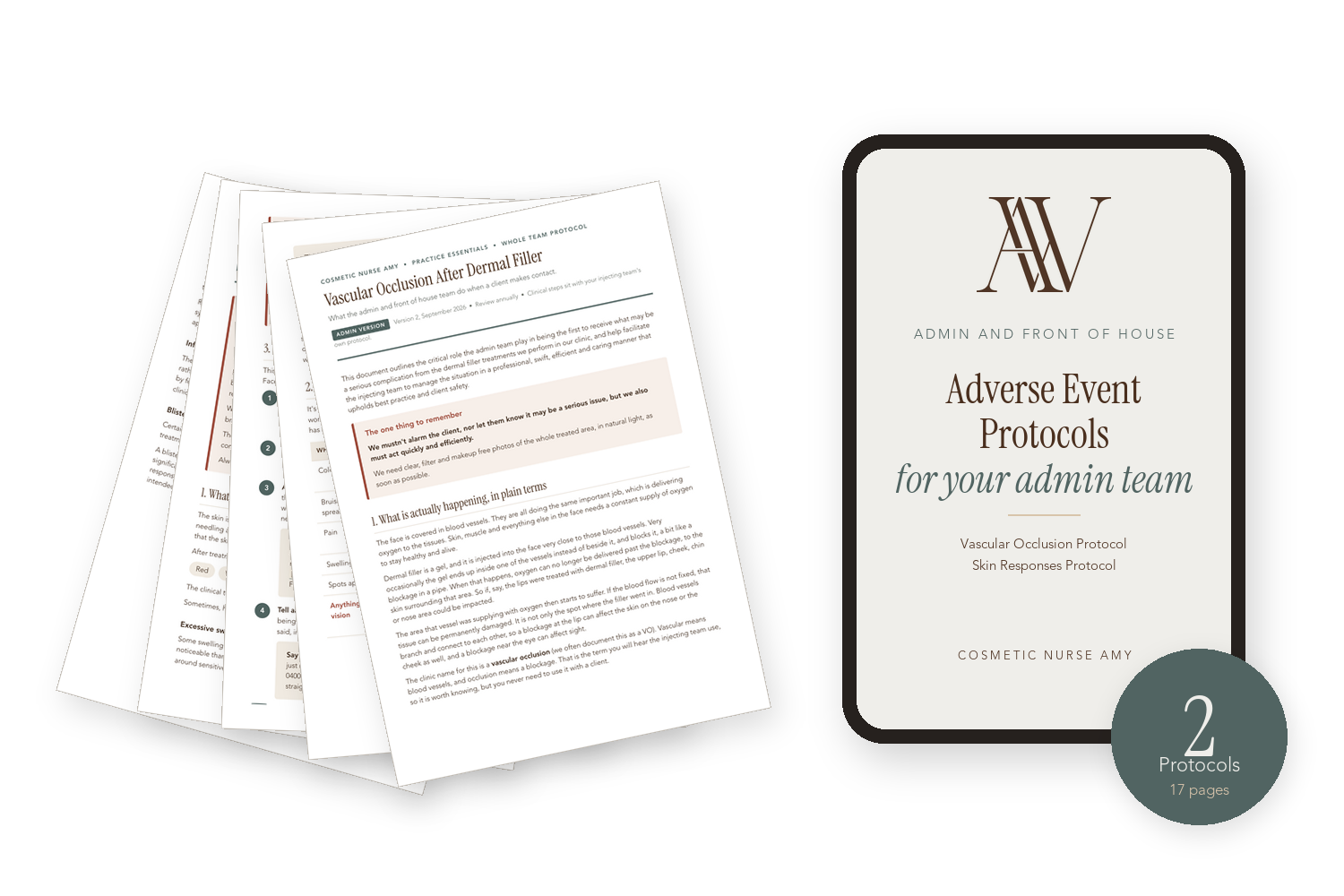

Your admin team will hear about it first.
When something goes wrong after a treatment, the client rarely rings the nurse. They message the clinic. Whoever is on the front desk reads it first.
They are not nurses, and they are not meant to be. But in that moment they are holding something that may be serious, and what they say next matters. Say too much and they have stepped outside their scope. Reassure the client and they may have promised something nobody can know yet. Sit on it until the injector is free, and the clock is running.
These are the protocols my own admin team work from. They give your non-nursing, non-medical team members the language, the dialogue skills and the efficiency to keep the client calm, get the right information to the right clinician fast, and stay inside their scope, every time.
What to do, in order. What to say, word for word.
Two protocols, written for the front desk, not the treatment room.
Plain English throughout, with no clinical steps and nothing your team would be tempted to repeat to a client.
Vascular Occlusion Protocol
What your admin team do from the moment a client makes contact about a filler treatment, through to the handover being confirmed and written up.
- What is actually happening, in plain terms, so the team understands why every minute counts
- The real words clients use, so "it looks a bit blotchy" is recognised for what it might be
- Eight steps in order, the same whether it arrives by phone, email, DM or walk-in
- Word-for-word scripts for the first reply, the phone call and the "what is happening?" question
- Vision and eye symptoms, the one thing that jumps every queue
- The never-say list, the escalation list and the one answer the admin team can give
Skin Responses Protocol
For laser, resurfacing, skin needling and other energy-based treatments. A traffic-light system so reception can tell what needs escalating now, what needs a clinician's review, and what is generally expected.
- Red, yellow and green: possible infection or burn, excessive swelling, histamine response
- What a client might say for each, in their words
- Scripts for every priority level, including "Is this normal?" and "Have I been burned?"
- The never-do list, so nobody at the desk ends up diagnosing
- Escalation, after hours, and the simple rule: when in doubt, show the clinician
Both protocols follow the same seven sections.
Learn one and you know the other. New team members can be walked through both in a single onboarding session.
What is actually happening
The plain-terms explanation, so the team understands the urgency without ever needing the clinical words.
What a client might say
Side-by-side tables of what they are describing and the words they actually use.
What you do, in order
Numbered steps from first contact to confirmed handover, whatever channel it arrives on.
What to say to the client
Scripts for the reply, the phone call and the questions that put a receptionist on the spot.
What you must never do
The lines that feel kind but cause harm, and why they are off the table.
Escalation and after hours
A fill-in escalation table so nobody is left deciding whether it can wait until morning.
Your scope
Exactly where the admin role starts and stops, and the one answer they can always give.
"Thank you so much for letting us know about what you've noticed."The line every protocol opens with
"I'm not a nurse, so I'm not the right person to tell you what is going on, and I don't want to guess with something like this."The answer that keeps them in scope
For the people who answer the phone.
- Clinic owners and practice managers who want the front desk ready before it happens, not after
- Reception and front-of-house teams, to keep at the desk and read on day one
- Solo injectors with a receptionist or VA taking their messages
- Anyone onboarding a new admin team member
Not written for the injecting team. Clinical assessment and management stay with your nurses and doctors, and are not covered here.


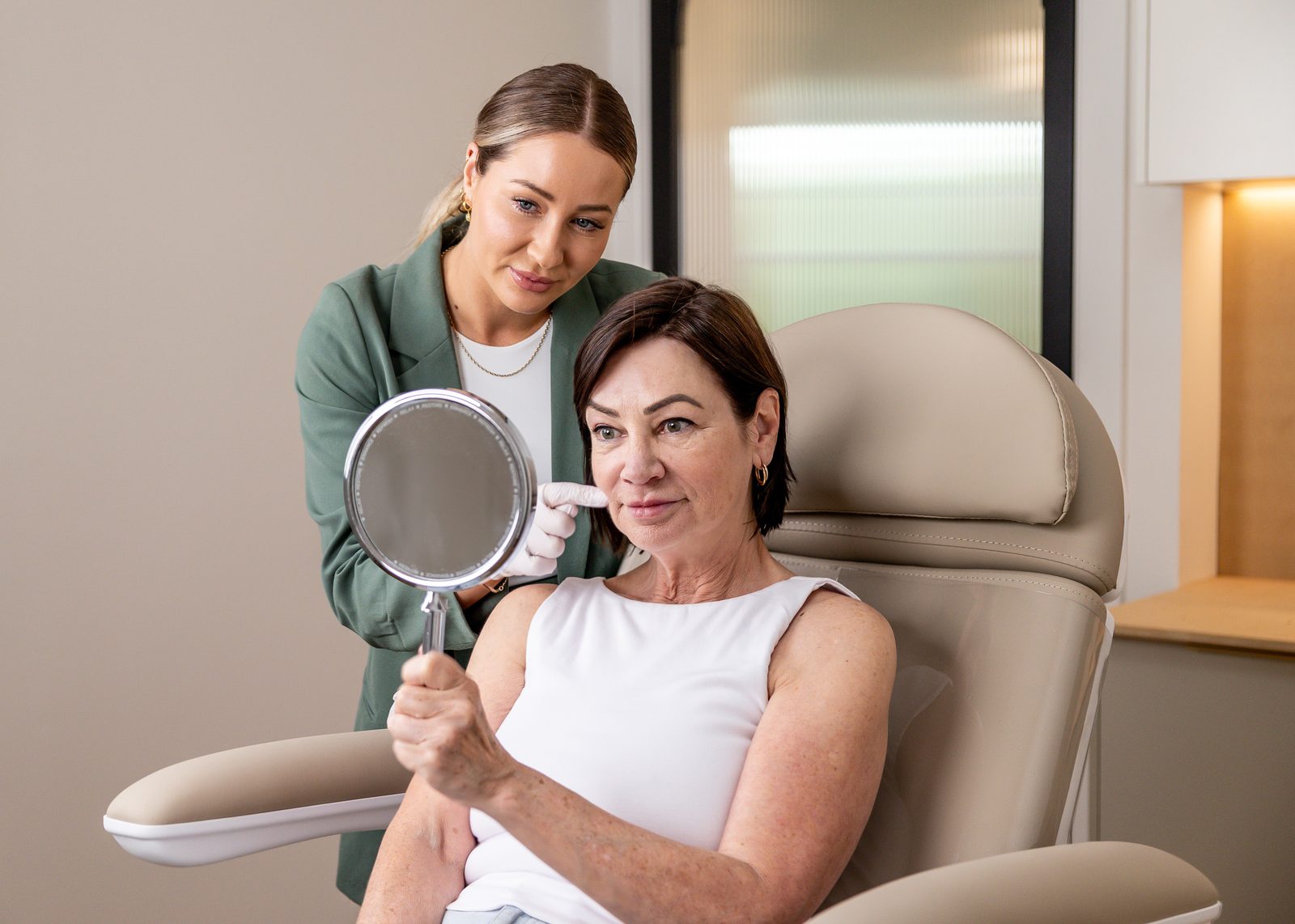


Amy Wright, RN
I'm Amy, registered nurse since 2008 and cosmetic injector for fourteen years. I built my clinic from a one-woman startup into a thriving team of thirteen, and for the first five years we grew completely through word of mouth.
My purpose and mission is to be a support to other injectors on their journey, to create community not competition, and to raise the industry standard for our clients, our colleagues and our businesses.
These are the exact protocols my own front-of-house team work from at Eltham Cosmetic Clinic, written for the people who pick up the phone, so they can look after the client and the clinic without ever being asked to be a nurse.
Ready before it happens.
Both protocols, as print-ready PDFs, in your inbox straight after checkout.
- Vascular Occlusion Protocol, admin and front of house (6 pages)
- Skin Responses Protocol, admin and front of house (11 pages)
- Escalation tables ready for your clinic's own numbers
- Print them, keep them at the desk, hand them to every new starter